
VASCULAR CONDITION
Deep Vein Thrombosis (DVT) Treatment
Deep vein thrombosis (DVT) is a condition in which a blood clot forms in a deep vein, most commonly in the thigh & legs. It generally causes pain and swelling and may lead to serious complications if not diagnosed and treated promptly.
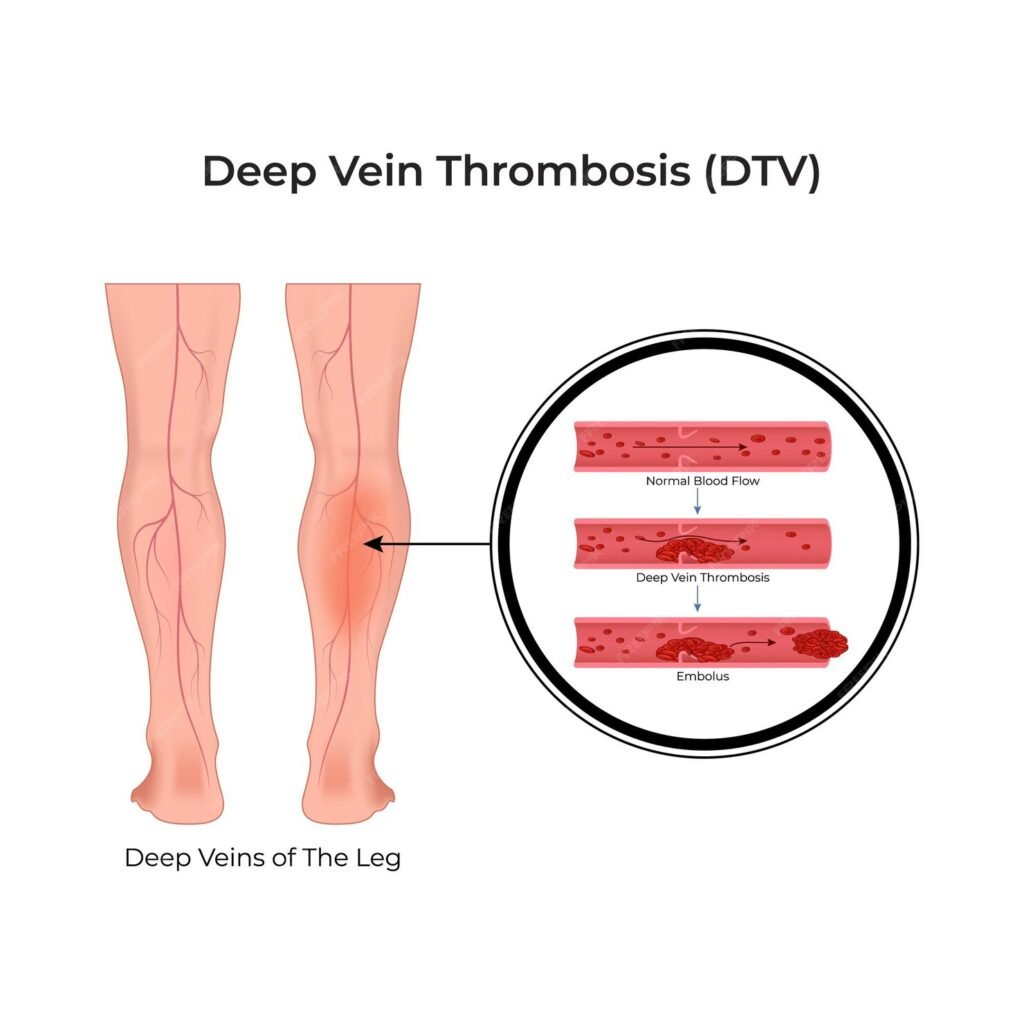
What Is Deep Vein Thrombosis?
Deep vein thrombosis occurs when a blood clot develops in a deep vein, usually in the lower limbs. These clots can partially or completely block blood flow, leading to swelling and discomfort.
In some cases, a clot can travel to the lungs and cause a pulmonary embolism, which is a life threating medical emergency. Early recognition and appropriate management are essential to reduce the risk of complications.
Common Symptoms
- Swelling of one lower limb or upper limb
- Pain or tenderness, often starting in the calf or thigh
- Warmth over the affected area
- Skin redness or discoloration
- Heaviness or tightness in the limb
- Post thrombotic syndrome PTS
When to See a Doctor
- Sudden leg swelling or pain
- Symptoms following surgery, long travel, or prolonged immobility
- Shortness of breath or chest pain (urgent evaluation required)
- Worsening pain or swelling despite initial treatment
- early signs of developing PTS
Causes and Risk Factors
Deep vein thrombosis develops when blood flow slows, the blood becomes more likely to clot, or the vein wall is injured.
Risk factors include:
- Prolonged immobility or bed rest
- Recent surgery or trauma
- Long-distance travel
- Pregnancy and postpartum period
- Cancer and certain medical conditions
- Obesity and smoking
- Previous history of DVT or clotting disorders
Diagnosis and Evaluation
Diagnosis of DVT is based on clinical assessment and imaging studies. The goal is to confirm the presence of a clot, assess its extent, and identify any underlying risk factors.
- Clinical examination and medical history
- Doppler ultrasound of the affected limb
- Blood tests in selected cases
- Additional imaging when required to guide treatment planning
Treatment Options
Treatment for deep vein thrombosis depends on the location and extent of the clot, severity of symptoms, and overall health of the patient. Management is individualized, with an emphasis on preventing clot progression and complications.
Treatment options may include:
- Medical management with anticoagulation therapy
- Image-guided venous interventions in selected cases
- Thrombectomy or clot removal for extensive or severe DVT
- Supportive measures such as compression therapy
The choice of treatment is determined after clinical evaluation and imaging, with the goal of restoring blood flow and reducing long-term complications.
Role of Interventional Radiology
Interventional radiology plays an important role in the management of deep vein thrombosis, particularly in cases with extensive clot burden or significant symptoms. Image-guided procedures allow targeted treatment of clots through small access points, minimizing trauma to surrounding tissues.
Compared to traditional surgical approaches, interventional radiology techniques may reduce recovery time and procedural risk in appropriately selected patients.
Frequently Asked Questions
Is deep vein thrombosis a serious condition?
Yes. While some cases may be mild, DVT can lead to serious complications such as pulmonary embolism if not treated promptly.
Does DVT always require hospitalization?
Not always. Some patients can be managed on an outpatient basis, depending on the severity of the condition and overall health.
Can DVT be treated without surgery?
Many cases are managed without surgery using medical therapy. Image-guided interventions may be considered in selected situations.
How long does recovery from DVT take?
Recovery varies depending on the extent of the clot and treatment approach. Some symptoms may improve within weeks, while others take longer to resolve.
Can DVT recur after treatment?
Yes. Patients with certain risk factors may experience recurrence, which is why follow-up and preventive measures are important.