
VENOUS CONDITION
Varicocele Treatment
Varicocele is a condition characterized by enlargement of the veins within the scrotum due to impaired blood flow. It is a common and potentially treatable cause of testicular discomfort and male infertility.
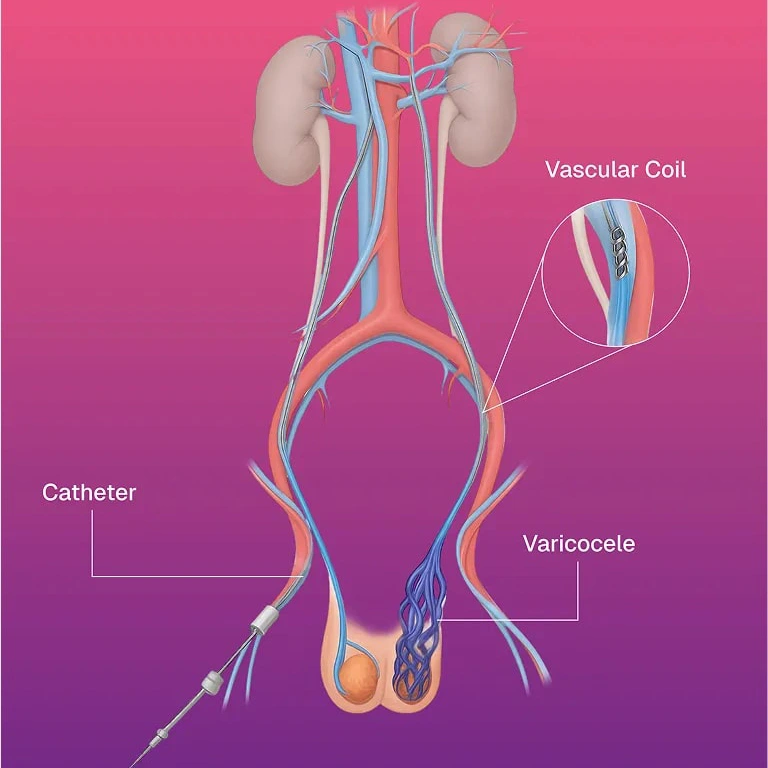
What Is Varicocele?
Varicocele occurs when the veins that drain blood from the testicles become dilated due to faulty valves, leading to pooling of blood. This is similar to varicose veins that occur in the legs.
Varicoceles usually develop gradually and are more commonly seen on the left side. While some men may not experience symptoms, others may develop pain, testicular changes, or fertility-related issue
Common Symptoms
- Dull ache or heaviness in the scrotum
- Pain that worsens with standing or physical activity
- Visible or palpable enlarged veins in the scrotum
- Testicular asymmetry or shrinkage
- Fertility concerns or abnormal semen parameters
When to See a Doctor
- Persistent scrotal pain or discomfort
- Noticeable swelling or vein enlargement
- Fertility evaluation showing abnormal results
- Male infertility
- Testicular size changes
- Symptoms affecting daily activities or quality of life
Causes and Risk Factors
Varicocele develops due to impaired venous drainage from the testicles.
Risk factors include:
- Abnormal venous valve function
- Anatomical factors affecting blood flow
- Increased pressure in abdominal veins
- Puberty-related changes
- Family history of venous disorders
Diagnosis and Evaluation
Diagnosis of varicocele focuses on confirming venous dilation and assessing its impact on testicular function.
Evaluation may include:
- Clinical examination in standing and lying positions
- Scrotal Doppler ultrasound
- Assessment of venous reflux
- Semen analysis in selected patients
- Evaluation of testicular size and blood flow
Treatment Options
Treatment for varicocele is considered when symptoms are present or when fertility is affected. Management is individualized based on clinical findings and patient goals.
Treatment options may include:
- Observation and monitoring in mild cases
- Medical management for symptom relief
- Minimally invasive image-guided procedures
- Varicocele embolization in selected patients
Treatment decisions are made after careful evaluation of symptoms, imaging findings, and reproductive considerations.
Role of Interventional Radiology
Interventional radiology plays an important role in the management of varicocele by offering minimally invasive, image-guided treatment options. Varicocele embolization targets abnormal veins through small access points without the need for open surgery.
This approach may result in shorter recovery time and reduced discomfort compared to traditional surgical techniques in appropriately selected patients.
Frequently Asked Questions
Is varicocele a serious condition?
Varicocele is usually not life-threatening, but it can affect testicular health and fertility in some individuals.
Does varicocele always cause infertility?
No. Many men with varicocele have normal fertility, but it can contribute to fertility issues in some cases.
Can varicocele be treated without surgery?
Yes. Many liver tumors are managed with image-guided procedures depending on tumor characteristics and liver function.
Is varicocele embolization painful?
The procedure is generally well tolerated and performed under local anesthesia.
Can varicocele come back after treatment?
Recurrence is possible, and follow-up is important to monitor outcomes.