
VASCULAR CONDITION
Dialysis Fistula Salvage
Dialysis fistula issues refer to problems affecting vascular access used for hemodialysis, such as reduced blood flow, blockage, or poor maturation. These issues can interfere with effective dialysis and require timely evaluation and management.
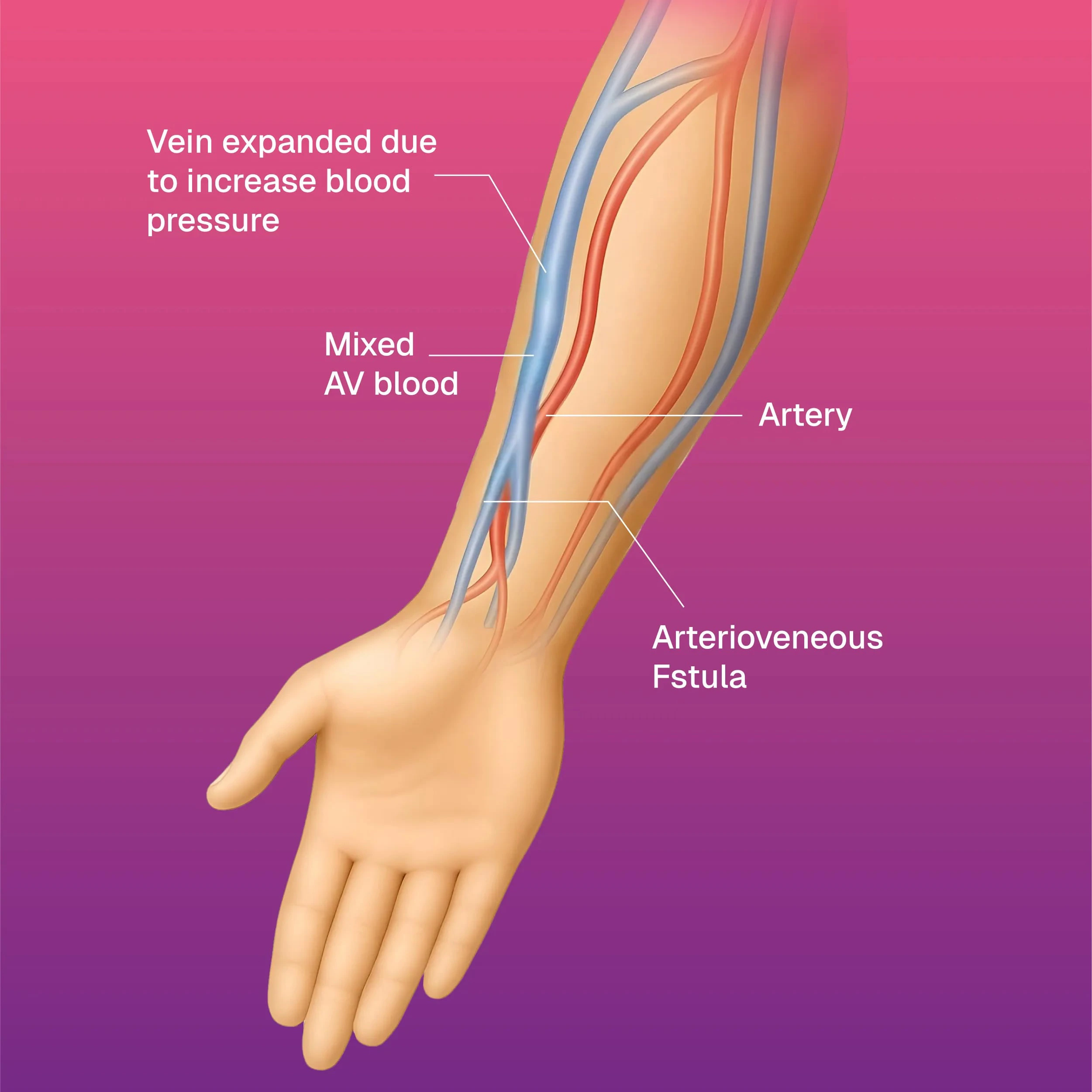
What Are Dialysis Fistula Issues?
A dialysis fistula is a surgically created connection between an artery and a vein that allows adequate blood flow for hemodialysis. Over time, fistulas may develop complications that reduce their function or usability.
Common problems include narrowing of the vessels, clot formation, inadequate blood flow, or difficulty in cannulation. Early identification and appropriate intervention help preserve access and ensure uninterrupted dialysis.
Common Symptoms
- Reduced or absent thrill or bruit over the fistula
- Difficulty during dialysis sessions
- Swelling of the arm or hand
- Prolonged bleeding after needle removal
- Pain or discomfort at the access site
- Decreased dialysis adequacy
- Face and limb swelling
When to See a Doctor
- Changes in fistula thrill or vibration
- Recurrent dialysis access failure
- Swelling or pain of the access arm
- Signs of infection around the access site
- Inability to complete dialysis sessions effectively
- Central veinous Occlusion CVO
Causes and Risk Factors
Dialysis fistula issues develop due to structural or flow-related problems within the access vessels.
Common causes and risk factors include:
- Narrowing (stenosis) of the fistula or central veins
- Clot formation within the access
- Poor fistula maturation
- Repeated needle trauma
- High-flow or low-flow access problems
- Long-standing dialysis access use
Diagnosis and Evaluation
Evaluation focuses on assessing blood flow through the fistula and identifying the cause of access dysfunction.
Assessment may include:
- Clinical examination of the access site
- Doppler ultrasound evaluation
- Fistulography or angiographic studies
- Assessment of dialysis adequacy and flow parameters
Treatment Options
Treatment of dialysis fistula issues aims to restore adequate blood flow and prolong the life of the access. Management is tailored to the type and severity of the problem.
Treatment options may include:
- Image-guided fistuloplasty
- Balloon angioplasty for narrowed segments
- Thrombectomy for access-related clots
- Central vein interventions
- Access salvage procedures
Early intervention can help prevent access loss and reduce the need for temporary dialysis catheters.
Role of Interventional Radiology
Interventional radiology plays a crucial role in managing dialysis fistula issues through minimally invasive, image-guided procedures. These techniques allow targeted treatment of access-related problems while preserving existing fistulas whenever possible.
Compared to surgical revision, interventional radiology procedures often involve shorter recovery times and can be repeated if necessary to maintain long-term access function.
Frequently Asked Questions
Why is my dialysis fistula not working properly?
Problems may occur due to narrowing, clot formation, or reduced blood flow within the access.
Can dialysis fistula problems be treated without surgery?
Many fistula issues can be managed with minimally invasive, image-guided procedures.
Is fistula intervention painful?
Most procedures are performed under local anesthesia and are generally well tolerated.
How quickly should fistula issues be treated?
Early evaluation and treatment are important to prevent access failure and interruptions in dialysis.
Can a treated fistula be used again for dialysis?
In many cases, timely intervention can restore fistula function and allow continued use for dialysis.