
ENDOCRINE CONDITION
Thyroid Nodules Treatment
Thyroid nodules are abnormal lumps that develop within the thyroid gland. Most nodules are benign and asymptomatic, but some may cause discomfort, hormonal imbalance, or require evaluation to rule out malignancy.
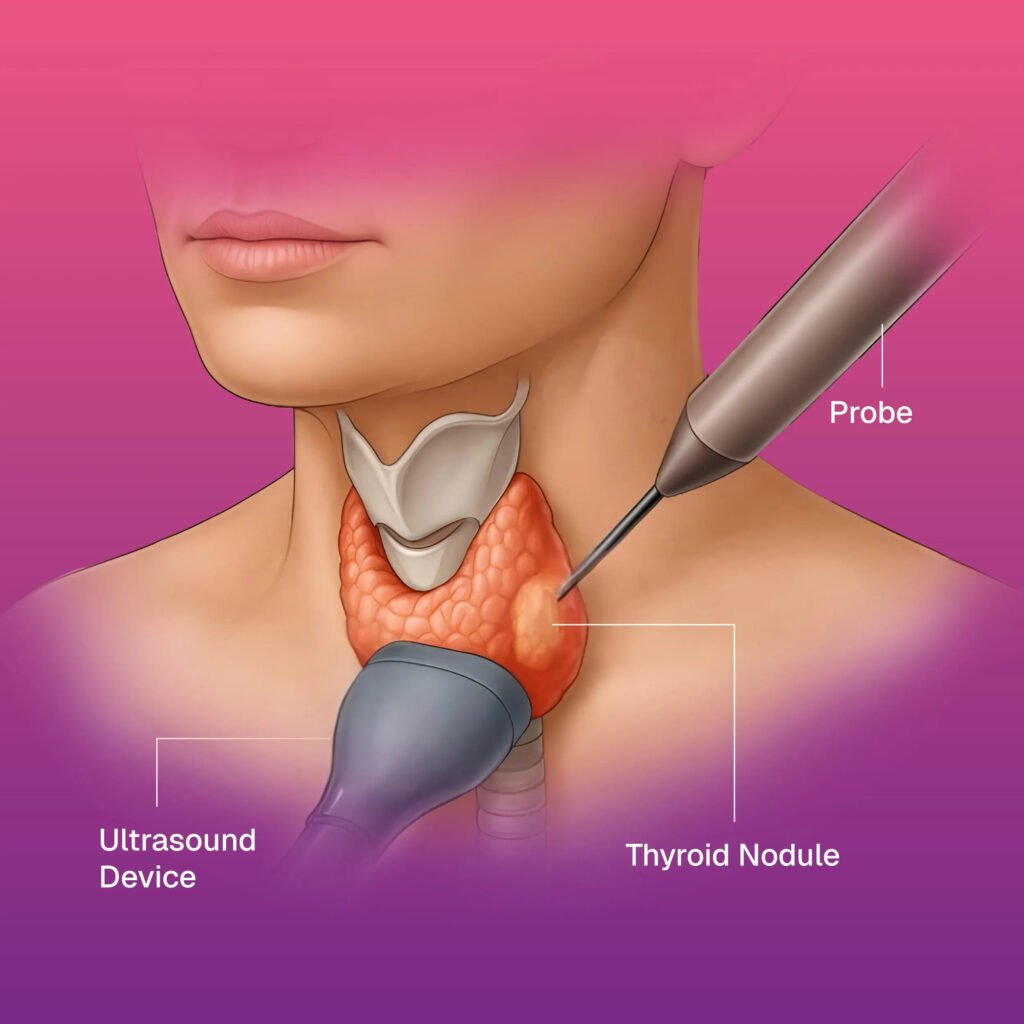
What Are Thyroid Nodules?
Thyroid nodules are solid or fluid-filled growths that form within the thyroid gland, which regulates metabolism through hormone production. They are commonly detected during routine examinations or imaging studies performed for other reasons.
While the majority of thyroid nodules are non-cancerous, proper assessment is important to determine their nature, functional status, and need for treatment.
Common Symptoms
- Painless lump in the front of the neck
- Neck discomfort or pressure
- Difficulty swallowing or breathing in large nodules
- Hoarseness or voice changes
- Symptoms of thyroid hormone imbalance in functional nodules
When to See a Doctor
- Rapidly enlarging neck lump
- Persistent neck discomfort or pressure
- Voice changes or difficulty swallowing
- Abnormal thyroid function test results
- Thyroid nodules detected on imaging
Causes and Risk Factors
Thyroid nodules can develop due to a variety of factors affecting thyroid tissue.
Risk factors include:
- Iodine deficiency
- Increasing age
- Female gender
- Family history of thyroid disease
- Exposure to radiation
- Chronic thyroid inflammation
Diagnosis and Evaluation
Diagnosis focuses on determining whether a thyroid nodule is benign or malignant and assessing its functional impact.
Evaluation may include:
- Clinical examination of the neck
- Thyroid function blood tests
- Ultrasound examination of the thyroid
- Fine-needle aspiration (FNAC) in selected cases
- Additional imaging when required
Treatment Options
Treatment of thyroid nodules depends on nodule size, symptoms, functional status, and diagnostic findings. Management is individualized.
Treatment options may include:
- Observation and periodic monitoring
- Medical management for hormone-related nodules
- Image-guided minimally invasive procedures
- Thyroid nodule ablation in selected patients
- Surgical referral when indicated
Treatment decisions are made after careful clinical and imaging evaluation.
Role of Interventional Radiology
Interventional radiology plays an important role in the management of selected thyroid nodules by offering minimally invasive, image-guided treatment options. Thyroid nodule ablation targets the nodule directly while preserving surrounding thyroid tissue.
These procedures may be suitable for patients seeking alternatives to surgery in appropriately selected cases.
Frequently Asked Questions
Are thyroid nodules usually cancerous?
No. Most thyroid nodules are benign, but evaluation is important to rule out malignancy.
Do all thyroid nodules need treatment?
No. Many nodules remain stable and do not cause symptoms, requiring only monitoring.
Can thyroid nodules be treated without surgery?
Yes. Minimally invasive, image-guided treatments may be suitable in selected cases.
Is thyroid nodule ablation painful?
These procedures are generally well tolerated and performed with appropriate anesthesia.
Can thyroid nodules recur after treatment?
Some nodules may recur or new nodules may develop, making follow-up important.